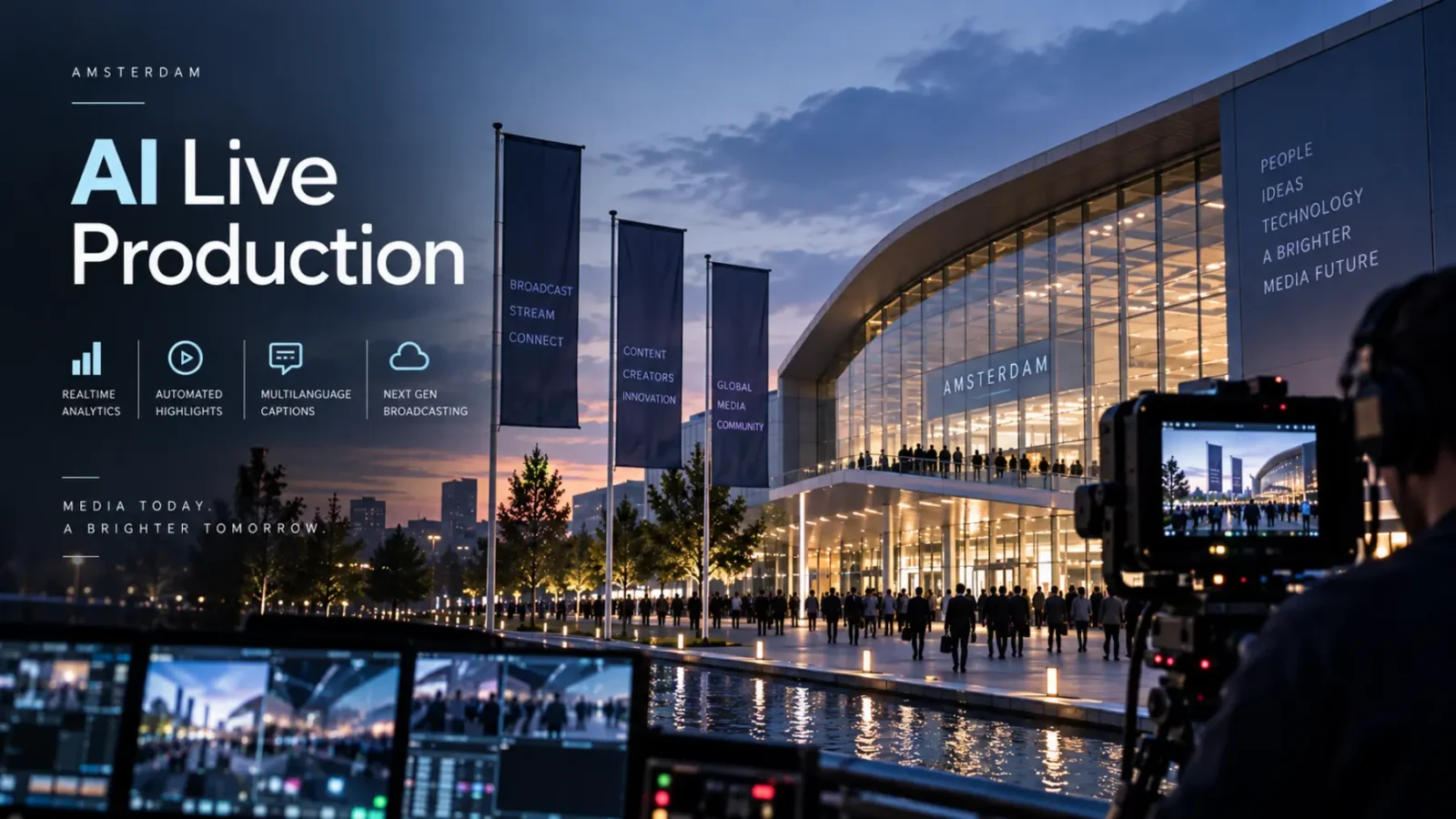
The evolution of AI on TV is breaking out of the editing rooms, recommendation engines and one-off experiments. A key area to watch at IBC 2026 in Amsterdam will be the integration of AI into live production – the real-time capture, processing and delivery of video.
Taking place at RAI Amsterdam from September 11-14, IBC brings together media tech firms, streaming services and broadcasters. Key topics include AI, cloud production, cybersecurity, sports broadcasting and next generation production.
In the media industry, real-time AI is critical for video understanding, enhancement, localization and live production workflows, according to NVIDIA. The potential is huge, because broadcasting is a much more difficult challenge than traditional AI content generation. An AI system can’t “pause” a live sports event or breaking-news feed to “digest” information.
Sports might be one of the most transparent testing grounds. Organizations such as FIFA, UEFA, Olympic Broadcasting Services, LaLiga and DAZN will be at the 2026 IBC to talk ultra-low-latency streaming, cloud production, AI personalization and new ways to distribute live events.
In the future, AI could allow a single live event to be experienced in multiple different viewing experiences at the same time. During the event, broadcasters can create localized commentary, multi-lingual captions, personalized highlights, accessibility features or social clips.
Infrastructure is another critical domain. Edge computing, private 5G and artificial intelligence can help broadcasters process more data closer to where content is captured, which can help reduce latency and make real-time AI more possible for sports and live news.
AI could also help in the search and reuse of large media archives. Broadcasters have vast libraries of footage, and more sophisticated discovery tools would allow producers to more easily find relevant clips and incorporate them into live or social workflows.
Trust will continue to be a big issue. As AI gains the ability to translate, edit and augment media in real time, broadcasters will need to develop more sophisticated systems of authenticity, provenance and verification.
So IBC 2026 could be a big bellwether for where media AI might be going. And maybe the bigger change isn’t the AI’s ability to create its own videos, but rather its role in the live broadcast itself, working unseen behind the scenes as the audience watches.