
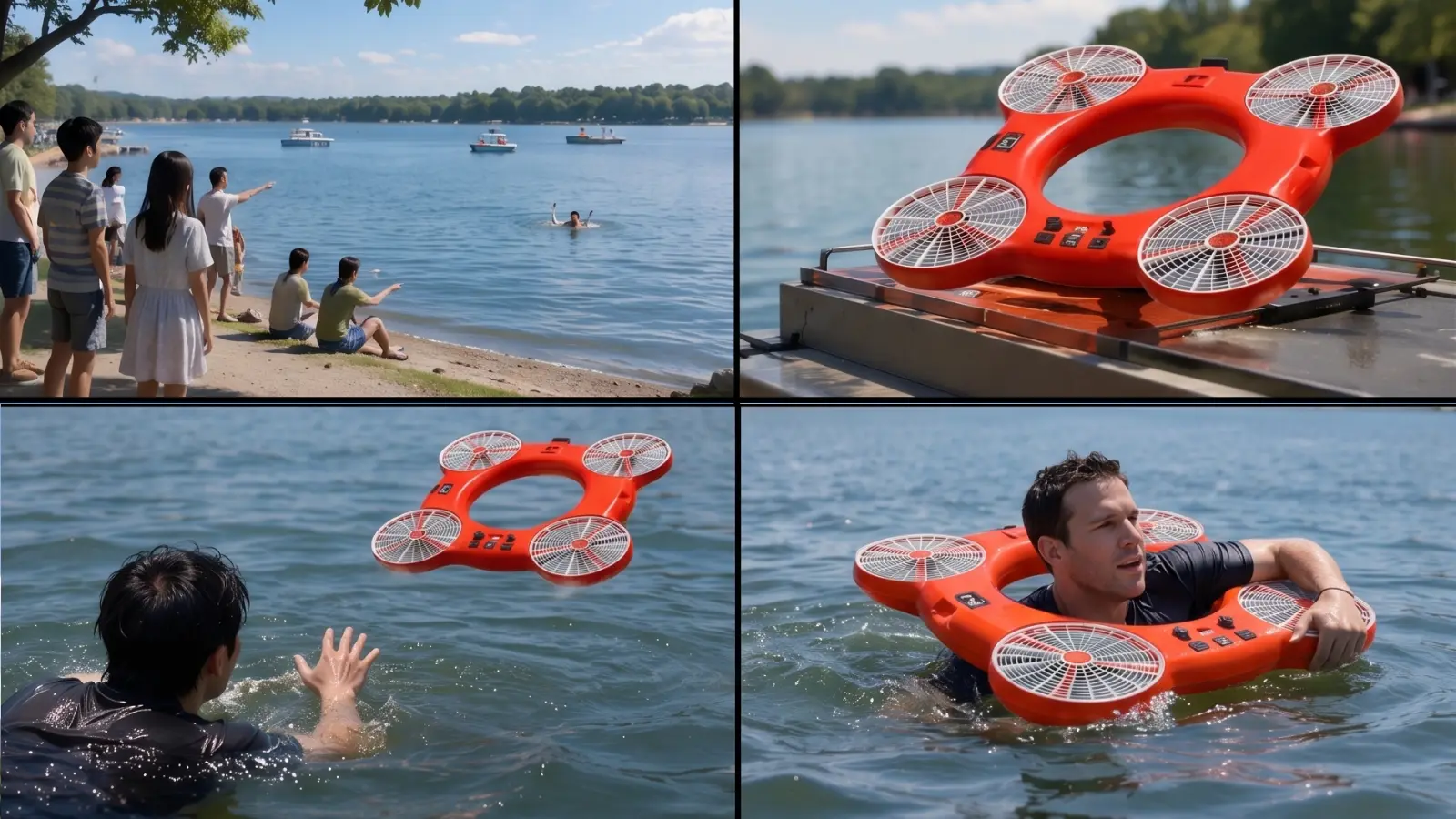
Its a beautiful summer afternoon at the lake, with the kids on the shore laughing and playing, the sun shining warm and a few boats bobbing along in the distance. Then suddenly someone yells out for help
Someone is in the water and they’re in trouble.
In those kinds of situations, everyone’s eyes are scanning the scene, desperately hoping that a lifeguard will jump in to the rescue or a boat will get moving. But the thing is, someone – or somethings – has to get out to that person in trouble before they get too exhausted to keep their head above water. But in Hangzhou, China recently, a new drill gave us a glimpse at a possible game-changer. What if the lifebuoy itself could fly?
At a lakeside emergency drill, a huge orange device shot into the air off the shore. No person guiding it, no rope to pull it along, just the thing flying – and it flew straight across the water to an actor pretending to be a swimmer in distress. It landed a few feet away from the person, and just – stopped.
Then came the real kicker…
As its rotors died down, what used to be a flying drone turned into a simple lifebuoy, floating gently on the water. This time, it didn’t just hover over the person waiting to be rescued – it stayed steady on the water, giving them something solid to grab onto while they waited for the human help to arrive. And to top it all off – once the rescue was done, the orange device picked itself up off the water and flew back home.
Which, to be honest, is just mind-blowing.
Classified as an “AI intelligent flying rescue robot”, this thing can navigate itself to someone in trouble, give them a temporary lifesaver to grab hold of, and then make its way back home. The people behind it all – the Hangzhou Scenic Area Public Security Sub-bureau – made this thing as part of a project to make emergencies by lakes and rivers a whole lot easier to handle.
What’s the most impressive thing about this thing? Its speed.
If you’ve ever witnessed a real water rescue, you know just how fast things can go from peaceful to life or death. Even if someone is only a hundred meters or so away, getting to them is a lot harder than it looks. The rescue boat has to get into position, and lifesavers have to navigate through crowds, currents and whatever depths they need to get to.
Panic takes over, and every minute feels like an eternity.