Sundar Pichai, chief executive of Google, said this week that the company’s AI models are helping scientists and clinicians move research results into patient care. He pointed to 90 peer-reviewed papers on disease research published in five years and cited more than 90,000 times in a LinkedIn post and linked to a Google blog post timed to a Research@ gathering in Mountain View.
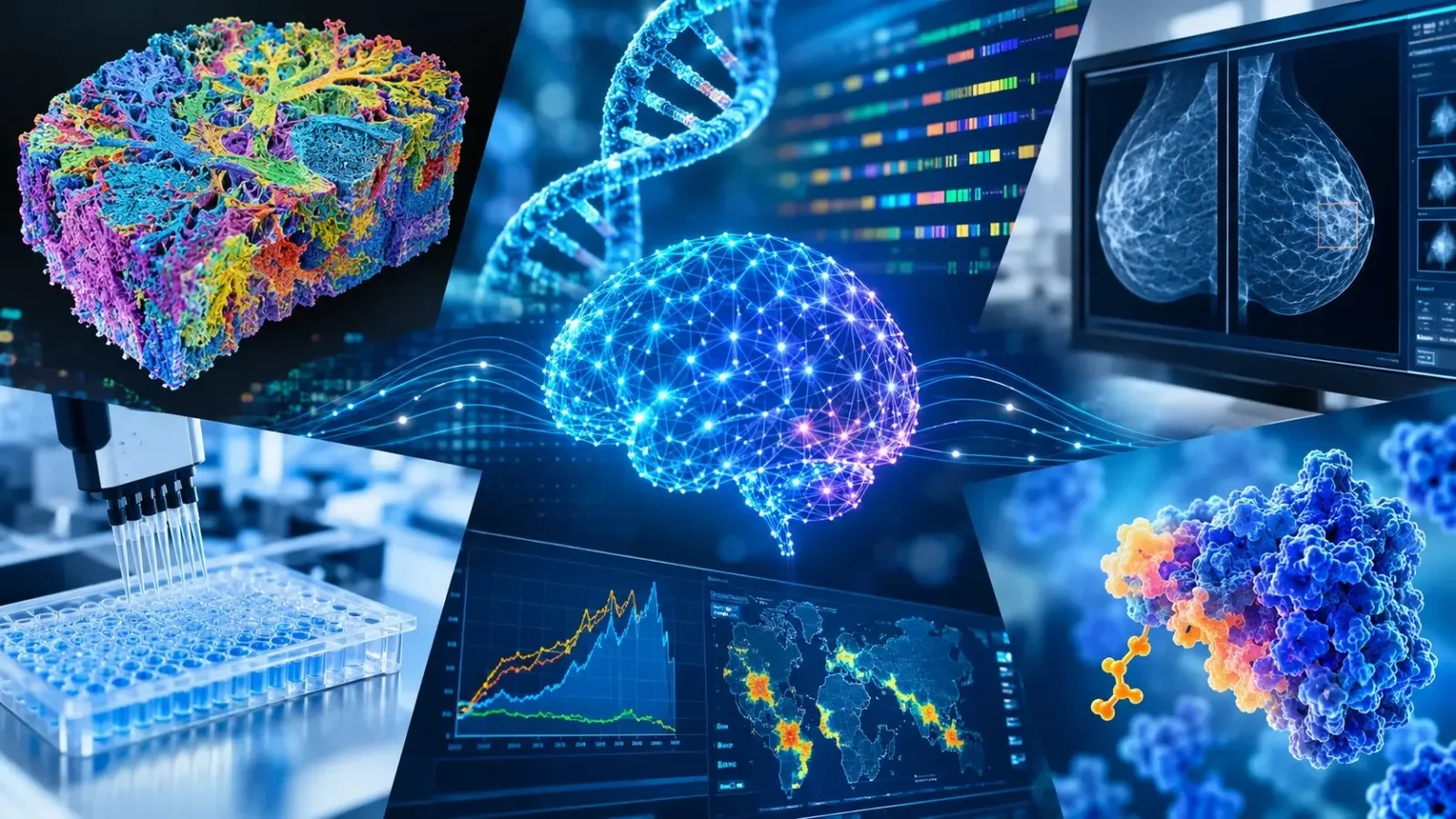
The post features three examples: a nano-scale map of human brain tissue by the Lichtman Lab at Harvard, genome sequencing performed in under eight hours from Stanford and a model that found missed mutations in cases of childhood leukemia at Children’s Mercy Hospital. The blog, by Google Research head Yossi Matias and Pushmeet Kohli, goes on to describe more, from breast-cancer screening to flu forecasting. What follows is an examination of those examples against the independent record: the journals, the trial sizes, and the points where Google’s account pulls ahead of the papers.
Google itself cites 90 papers
The headline numbers – 90 papers and over 90,000 citations in five years – come from Google itself. There is no external audit and the company has not published its counting methodology. That doesn’t make the number wrong, but it does mean readers should take it as a company figure, not a verified fact.
What is more interesting is what can be verified. Google’s examples include a number of papers published in major journals—the New England Journal of Medicine, Science, Nature, Nature Cancer and Nature Biotechnology—and an end-of-season evaluation by the Centers for Disease Control and Prevention. Those sources let a reader distinguish between what outside researchers have confirmed and what Google says about itself.
A cubic millimeter of human brain, cell by cell
The oldest example in the post is also the most visually arresting. For nearly a decade, Google Research worked with Jeff Lichtman’s lab at Harvard to reconstruct a one-cubic-millimeter chunk of human temporal cortex, about half the size of a grain of rice, at nanoscale resolution. According to the Harvard Gazette, the resulting data set includes some 57,000 cells, 230 millimeters of blood vessels and 150 million synapses, the connections between neurons, in some 1.4 petabytes of data.
Google’s team created AI models to stitch together and segment Harvard’s electron-microscopy images. The paper, with three first co-authors from Harvard and Google Research, was published in Science in May 2024, and the full data set was released for anyone to browse through Google’s Neuroglancer viewer. The next stated goal of the collaboration, backed by the National Institutes of Health BRAIN Initiative, is a complete mouse brain, which will require about 1,000 times as much data.
The payoff for patients is indirect A wiring diagram at this resolution provides researchers with a benchmark for investigating how brain circuits are changed in neurological disease. Google and Harvard also shared maps of smaller brains, including the fruit fly, larval zebrafish and songbird, to share tools for the field.
From sample to diagnosis in roughly eight hours
Stanford’s example is patients in critical care who are suspected of having a genetic disease, where a diagnosis can change treatment in a matter of hours. The team sequenced the whole genomes of 12 patients in less than six months, led by Stanford’s Euan Ashley and with postdoctoral scholar John Gorzynski as lead author. Five received a genetic diagnosis with an average time from sample to answer of approximately eight hours.
The fastest case set two records: the genome in 5 hours and 2 minutes and a diagnosis in 7 hours and 18 minutes. The sequencing mark was certified by Guinness World Records and the result was confirmed by the Genome in a Bottle group at the National Institute of Standards and Technology. Contemporary coverage noted the previous record for a sequencing-based diagnosis was roughly 14 hours, held by the Rady Children’s Institute.
Speed came from brute force and software. Google says the team ran 48 Oxford Nanopore flow cells in parallel on a single genome, piped the data to the cloud, and called variants with its DeepVariant and DeepConsensus models as the reads came in. The diagnostic rate, about 42 percent, was some 12 percentage points higher than what’s typical for unsolved cases. The results were reported in the New England Journal of Medicine in 2022.
Limits are clearly outlined in the paper itself. Twelve patients is a small trial, and it is expensive to run dozens of flow cells on a single genome. But the message is the same: sequencing that used to take weeks now fits into a hospital shift.
Ten mutations not previously identified
DeepSomatic is a deep learning model for detecting somatic mutations, changes in DNA found in tumor cells but not in normal tissue. The hospital said the technology was developed by researchers at the UC Santa Cruz Genomics Institute, Google Research and Children’s Mercy Hospital and described in Nature Biotechnology. The model is open source.
Children’s Mercy applied it to childhood leukemia cases that had been sequenced. Working from tumor-only samples, it confirmed every known variant and picked up 10 mutations that previous analyzes missed. That last detail is important: it is much harder to distinguish a real mutation from a sequencing error without a matched sample of healthy tissue to compare against, especially with long-read data, which makes different errors than the older short-read machines.
The findings could help inform how doctors assess risk of patients and choose targeted treatments, Google says. That 10-mutation number is from Google; the hospital’s own description of the collaboration and the Nature Biotechnology paper describe the collaboration and paper but do not repeat that figure, so readers should treat the count as company-reported.
Mammograms and Flu Predictions: New Data
The latest clinical data comes from two related papers in Nature Cancer published in March 2026 with Imperial College London and several NHS trusts. In a retrospective study of 125,000 women aged 50 to 70 across five NHS screening services, researchers tested Google’s mammography software as a second reader, the role usually filled by another radiologist.
The AI-assisted reads identified 9.33 cancers per 1,000 women compared to 7.54 for the first human reader and detected 25 percent of interval cancers, cancers diagnosed between screening rounds after a clear scan, in the final analysis of 115,973 scans, according to coverage of the papers. It cut recalls by 39.3 percent and detected 8.8 percent more cancers for women undergoing their first screen.
On workload, the paper found a 32.1 percent decrease in reading time. Google’s blog rounds this to “up to 40 percent,” exaggerating the published number. The second paper is a helpful check. When comparing a human + AI with arbitration for disagreement to 2 humans, the results were roughly equivalent with differences that were not statistically significant. The AI found more hard-to-detect cancers, but it marked more healthy scans, too.
Even a partial gain counts in the context. Britain is facing a 29 percent shortage of clinical radiologists, which is predicted to be 39 percent by 2029. It’s not better than two humans, but a second reader that never gets tired could take some of the pressure off screening programs.
Google’s entry, Google_SAI-FluEns, was ranked first out of 39 eligible models in the CDC’s end-of-season evaluation of its 2025-26 FluSight program for predicting flu-related hospitalizations. Google’s write-up of the CDC evaluation and the CDC’s season report show it scored 0.56, compared with 0.62 for the CDC’s own combined forecast, which placed seventh. According to Google itself, the model was created with the help of Empirical Research Assistance, an AI tool that writes optimization algorithms.
The result is important because Google has tried and failed at this before. Google Flu Trends, which relied on search-query data, was launched in 2008 but consistently overestimated flu levels, and was shut down in 2015. The new model is based on hospital records and other data feeds, and the CDC compared it to actual admissions, a tougher test than the company’s own marketing.
Drugs, enzymes and outbreak maps – the remainder of the list
Other examples on the blog are earlier stage. According to Google, researchers at Barcelona’s Institute for Global Health used AlphaFold to virtually screen 30,000 compounds against Chagas disease, a parasitic illness affecting some 8 million people, and identified two approved drugs as repurposing candidates.
Google DeepMind’s AlphaGenome Atlas precomputes predictions for all 9 billion possible single-letter changes in the human genome, ranked by a single impact score. Gareth Hawkes, a Medical Research Council fellow at the University of Exeter, used it on whole-genome data from more than 54,000 UK Biobank participants and found 22 percent more non-coding associations than standard methods, including variants that affect PLA2G7, a protein linked to aging, and EGLN1, a cellular oxygen sensor. The analysis also identified 19 genomic regions linked to body-mass index, when limiting the search to the top 1 percent of variants, according to the impact score of the Atlas. They are predictions, not measured effects, a distinction independent coverage has stressed.
Two are further away from the clinic. AlphaProtein Novo designs enzymes from scratch, creating enzymes for drug chemistry and ones that break down plastics in extreme conditions in lab tests. In a bioRxiv preprint, And Google said it used its Earth AI models, together with environmental and mobility data, to map Ebola exposure risks with WHO’s Africa office and the DRC’s INRB institute, replacing weeks of manual coding.
Finally, Google.org says it contributed over $60 million in 2026 to organizations using AI for disease research, including Makerere University’s Infectious Disease Institute, which is predicting mutations for drug resistance in malaria, and the University of Pennsylvania, which is developing cell therapies to target solid tumors.
What Google hasn’t revealed yet
This is a progress report, not a product launch. None of the models described are presented as cleared clinical products and the blog does not discuss regulatory review. The mammography work was retrospective, the sequencing trial involved 12 patients, the Atlas is in the prediction business. Each a step, not a finished medical tool.
Readers should also keep their sourcing straight. You can check the brain map, the sequencing record, the mammography papers, the flu ranking and the Exeter analysis in journals or a federal evaluation. All the 90 papers, all the 90,000 citations, the Chagas drug candidates, the Ebola deployment, the grant total, all from Google.
The trend through the post is the same: publish the paper, release the data or the model, and let outside researchers test the claims. DeepSomatic open source release, brain data set open, and publication in major journals have all been subject to scrutiny and for the most part have held up. The harder part is what comes next: prospective trials, hospital adoption and proof that tools such as the mammography reader improve outcomes in live screening programs, not retrospective data. It will also be a test of whether Google’s model can replicate its CDC ranking for the 2026-27 flu season. For the moment, the evidence backs a somewhat more modest version of Pichai’s statement: Google’s models are producing real research results, and some are getting closer to the clinic.