
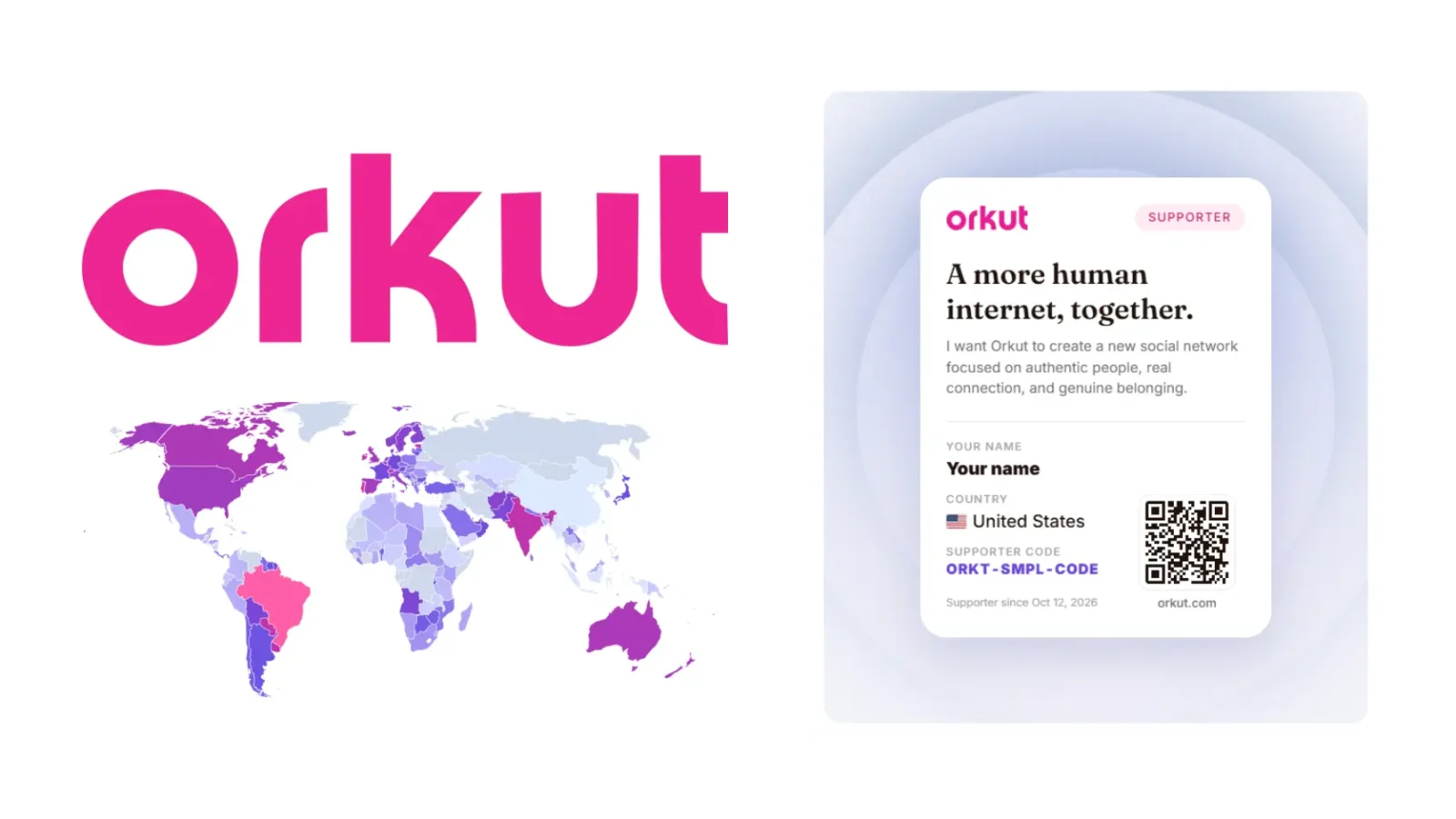
Orkut Büyükkökten, the founder of the now-defunct social networking site Orkut, is calling on internet users to join him and support his vision to build a new social network based on real people, common interests and authentic friendships. He has posted an open letter explaining why he believes online communities deserve a fresh start through orkut.com and is asking supporters to add their names and share their support cards with friends.
The initiative has rekindled interest in a platform that is remembered by millions of users, particularly in India and Brazil. However, the website is a request for public support, not a confirmed relaunch. The new Orkut social network has not been released, with no official launch date, registration schedule or detailed list of features.
What is the new project of Orkut?
The message is clear on the new site: social networking is about helping people find each other, not just getting them to scroll more. Büyükkökten wants a network where the number of views or reactions a post gets is less important than friendships, shared interests, respectful conversations, and a sense of belonging.
The founder posted an open letter on the official Orkut website, recalling the early days of online social networking when a message from someone thousands of miles away could spark a memorable conversation. He thinks the experience is worth bringing back, with communities giving people a reason to participate rather than leaving them as passive viewers of an endless feed.
The campaign is asking people to go to the website, add their names in support of the proposed network, get a unique supporter code and shareable card and send that card to someone they would like to have join them. The idea is to make friendship the heart of the campaign itself, where instead of just re-posting a promotional message, supporters are encouraged to tell a friend why they were thinking of them.
Why Orkut’s Community Model Still Matters
For those who used it before, Orkut was more than just profile pages and friend lists. Its communities were made up of people who shared hobbies, interests, day-to-day routines, and even a sense of humor. A motorcycle enthusiast could connect with other fans, and people who shared a specific commute or enjoyed the same kind of music could find each other in a special online space.
“People miss these groups most about the original service,” Büyükkökten recalls. His letter explains the difference between being in a community and appearing in a feed. A community provides a shared purpose, an opportunity to contribute, and a reason to return beyond the next recommended content.
That concept could appeal to those who want more power over their online life. A network organized by a community might help to find people with similar views, share useful information, keep in touch and organize real-life events outside the screen. But these are goals the founder has articulated, not features confirmed for a new product.
How the proposed Orkut network would tackle the AI
Artificial intelligence is another major theme in Büyükkökten’s message. “It is getting harder to tell if posts, comments, pictures and voices online are really coming from the person they appear to represent,” the official website says. The founder wants a social environment where users can have more confidence in the identity of the person on the other side of a conversation.
He’s not saying there’s no place for AI in social networking. Instead, the website describes a model in which AI helps people make new friends, reconnect with old friends and strengthen existing relationships. It’s the difference between using technology to augment human interaction versus allowing automated content or interactions to supplant it.
Turning that idea into a working service would involve pragmatic decisions about identity checks, fake accounts, impersonation, moderation, privacy and how AI-generated material is handled. The site has not yet published a detailed technical plan for how a future network would solve these problems. Its message now states the direction it wants to go in, but the details of implementation are yet to be announced.
Is The Original Orkut Back To Life?
Google discontinued the original Orkut service in September 2014. With the closure, former users lost a place where their profiles, testimonials, friend connections, and interest-based communities were.
More than a decade later, the official website is again using the Orkut name to rally support for a proposed social network with a renewed emphasis on authentic connections. Büyükkökten’s official biography page says his background includes the original Orkut service and other social networking projects.
The one big difference between this initiative and a product launch that’s already been completed is this: The website is currently asking people to register their interest in a new network, but it does not confirm that the former service has been revived or that a replacement is ready for public use. Adding a name doesn’t reserve a username, create an account or guaranty a place in a future registration queue, it said.
So, readers should understand that this is an effort to test and develop public backing, not a declaration that a new platform will be available right away.
How to support Orkut’s new social network
Those who like the idea can go to the official Orkut website and follow the instructions to add their name. After you submit, the website gives you a supporter code and a shareable card so you can tell people that you want to see a network built on real people and authentic belonging.
There are also participation figures and a country split of sign ups, showing interest from different parts of the world. These numbers may vary as more people take part, so the reader is encouraged to check the live website, rather than a number quoted in an older report.
Visitors are advised to review the site’s privacy policy and terms of use prior to submitting personal information so that they understand how their information will be used and what it means to register for support. The website says that this is an indication of interest in the proposed network, and does not itself create a social media account.
What would make a new Orkut worth it?
I think it’s a good idea but it is contingent upon what happens after the first campaign. A new social network would need to give people compelling reasons to return often, find meaningful communities, build trust, and keep relationships going without making metrics of popularity the main draw.
One of the most useful areas could be community discovery, if the service eventually helps people find groups based on real interests and gives members a meaningful role. And anyone who wants a more pleasant online experience should also care about clear identity controls, considered moderation, understandable privacy choices, and tools that make unwanted interactions easier to navigate.
The other big question is how the service would remain afloat. How it conducts its business, how it advertises, its data practices, and how it deals with content created by AI all could be the difference between whether the experience lives up to the principles laid out in the founder’s letter. No full product or business plan has yet been published on the official website.
For those who remember the original Orkut, the initiative offers a reason to revisit the idea of online communities. For younger users who have never used the service, it provides a new way of thinking about social networking: not as a contest for attention, but as a place to meet people who have something in common with you.
Orkut’s next chapter is a proposal and it will be judged by the product that emerges if it sees the light of day. For now, Büyükkökten is asking a simple question to the online public: Would people back a network that puts friendship and community first? How that invitation is received may help him determine whether there is a wide audience for the type of social experience he is trying to build.