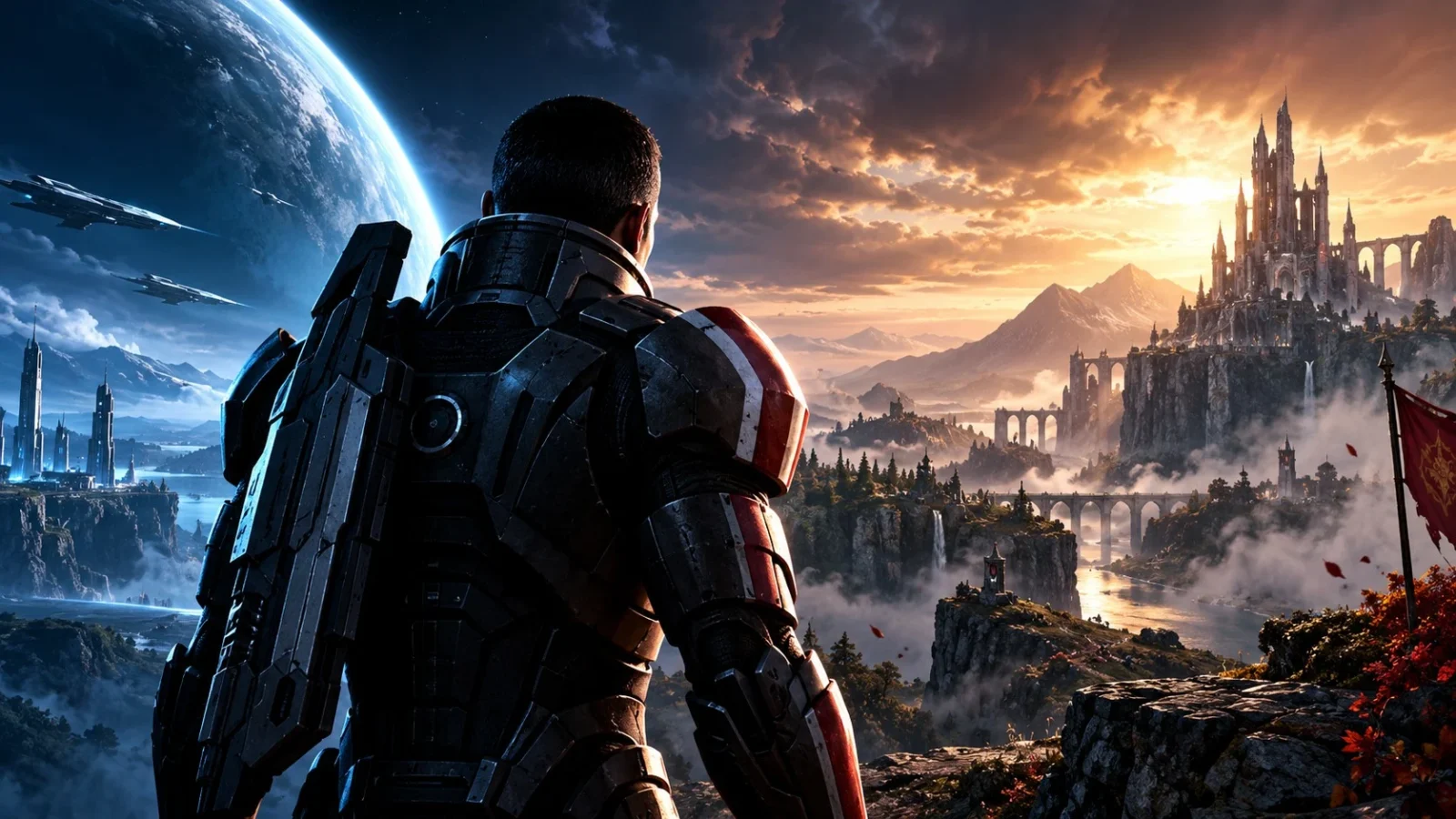
Electronic Arts is shuttering BioWare, the Canadian video game studio that made Mass Effect, Dragon Age and Star Wars: Knights of the Old Republic, bringing an end to over three decades of role-playing game development. On October 21, 2026, the company confirmed the decision and announced that work on the next Mass Effect game would be halted. The shutdown is part of a broader restructuring that is expected to cut about 400 jobs across EA, including about 50 jobs at BioWare, Bloomberg reported.
The announcement now leaves two of gaming’s most iconic role-playing franchises with no announced future of development. EA has announced no other studio to take over Mass Effect or Dragon Age, and publisher EA has said nothing about whether either series will return. The decision also sheds light on EA’s investment priorities, which are increasingly focused on established sports franchises, multiplayer shooters and a smaller number of large development projects.
Why Is EA Closing BioWare?
EA announced the closure of BioWare via an official announcement published on October 21. In a message to employees, Chief Studios Officer Cam Weber and Chief Operating Officer David Tinson said the company was undertaking a company-wide review of development spending, studio operations and future investment opportunities.
EA had been keeping a small BioWare team working on the next Mass Effect game, the announcement says. The publisher will not move forward with the project and will shut down BioWare’s Edmonton studio. The company said the decision was part of an effort to focus employees and development resources on a smaller selection of games.
EA’s explanation is about business priorities, not a specific failure at BioWare. The company said it wants to make more aggressive investments in franchises with established audiences, while reducing the number of big projects being developed at the same time. That means its remaining teams will get more access to development resources, but it also means some franchises will no longer get investment under their current plans.
It comes after a difficult few years for BioWare. Mass Effect: Andromeda was released in 2017 and received mixed reviews from critics and players alike, and Anthem was released in 2019 and struggled to develop the long-running multiplayer fan base EA was hoping for. And Dragon Age: The Veilguard, which released in 2024, also didn’t hit EA’s commercial expectations.
Those releases are part of BioWare’s recent business history, but EA has not identified any one title as the reason for closing the studio. The official explanation is the publisher’s overall development portfolio, and where it plans to spend money in the coming years.
Where’s the next Mass Effect game?
The next Mass Effect game has been scrapped. BioWare said the project was still in early development when EA decided to halt work on it and as such, it was not up to a publicly-confirmed release schedule. The announcement brings to an end the development work that had offered fans hope for another big new addition to the sci-fi franchise.
It matters whether you are canceling a project or discontinuing a franchise. EA has confirmed BioWare is no longer working on the next Mass Effect, but has not announced the intellectual property is being retired indefinitely. The publisher may bring in another installment down the line but no replacement developer or production plan has been announced.
This is particularly disappointing for those players who have been along for the ride since the first Mass Effect launched back in 2007, as the series has always been inextricably linked with BioWare’s approach to storytelling. Its original trilogy had third person fighting, relationships between characters, and decisions that could affect multiple games. Choices made in one game may have repercussions for dialog, character appearances and story endings in future installments.
The structure required a lot of coordination between writers, designers, programmers and quality assurance teams. Each game had to be able to recognize various player choices, and still have a coherent story for newcomers. The experience that followed became one of the defining characteristics of the franchise, and helped to differentiate Mass Effect from more traditional action games.
EA hasn’t said whether it will keep any concepts, technology or other development materials from the canceled project for future use. There is no way of knowing when another Mass Effect game might turn up, as there is no confirmed successor project.
Is Dragon Age Canceled?
EA has made no announcements about a new Dragon Age title or a studio to continue the series after the closure of BioWare. That leaves the future of the franchise in limbo, but the lack of a development announcement is not the same as saying the whole series is on permanent hold.
Dragon Age began with Dragon Age: Origins in 2009, and grew into one of BioWare’s most recognizable fantasy franchises. The games became known for their companion characters, political conflicts, fictional histories, and dialog options that affected relationships and story outcomes.
The next Dragon Age, Dragon Age: The Veilguard, was released in 2024 after a long development cycle. Reception from players was mixed, especially regarding the changes to combat, the writing and the overall direction of the series. The game also ran into commercial trouble, adding to questions about BioWare’s future at EA.
The closure of the studio is a logistical problem for any possible continuation. A new development team would need to understand the established fictional world, existing character relationships, and expectations built over the course of earlier games. It would also have to decide how much a new installment should hew to BioWare’s prior design decisions.
EA still has the opportunity to decide what to do with the franchise in the future, but the publisher hasn’t made any public promises about another release. Until we see a development team or project announced, anything anyone says about the next Dragon Age game is pure speculation.
The Impact of BioWare on the Evolution of Modern Role-Playing Games
BioWare, founded in Edmonton, Alberta in 1995, went on to become one of the most influential developers of Western role playing games. Its early games combined traditional computer RPG mechanics with character-driven stories, giving players more control over how they interacted with fictional worlds.
The studio hit the big time with Baldur’s Gate in 1998. The game takes place in the Dungeons & Dragons universe, and features party-based adventure, lots of dialog, tactical combat, and character development. Its success triggered renewed interest in computer role-playing games and further work in the genre.
BioWare kept making RPGs with Neverwinter Nites and Star Wars: Knights of the Old Republic. The latter, released in 2003, allowed players to make choices that affected their relationships and their adherence to the light or dark side of the Force. It’s narrative approach became one of the most recognizable examples of choice-driven storytelling in a licensed video game.
The studio upped its ambitions in 2007 with Mass Effect and then Dragon Age: Origins in 2009. Both franchises built the experience around companion relationships and dialog choices, but they differed in terms of setting and gameplay systems.
In 2007, EA purchased BioWare and the developer was now part of a larger publishing organization with access to large financial and distribution resources. Under EA, BioWare continued major releases, including Mass Effect 2, Mass Effect 3, Dragon Age: Inquisition, and later entries in both franchises.
You can also see BioWare’s influence in games developed by other studios. The franchise BioWare helped build would continue in the hands of Larian Studios, but Baldur’s Gate 3 would not be released until 2023. Although not made by BioWare, its emphasis on player choices, party dynamics and branching narratives are in the broader RPG tradition that BioWare popularized .
So the closure has more impact than just the future of individual game series. It marks the end of a studio whose design decisions have influenced how developers approach character relationships, dialog systems, and long-form interactive storytelling.
EA Restructuring To Impact Some 400 Positions
BioWare’s closure is part of a broader downsizing at Electronic Arts. The company plans to cut about 400 jobs, or 3 per cent of its staff, Bloomberg reported. A person familiar with EA’s plans said about 50 of the jobs are tied to BioWare.
The restructuring also impacts other development projects. EA said Respawn Entertainment and DICE are working together on a future shooter, while the publisher continues to invest in Battlefield and Apex Legends. Other reports connected the studios with Star Wars: Battlefront 3, although the company never officially called the collaboration that.
EA also is changing its plans for The Sims and skate.. There is a Sims development called Project Lotus that has been put on hold as resources are being reallocated to Project Evergreen. The skate. The development team will be smaller, but work on the game will continue.
Other announced priorities include the next Star Wars Jedi game, Marvel’s Iron Man, EA Sports FC, and new sports-related projects. EA also announced a new American football experience called Project Gridiron and a return to the Fight Nite boxing franchise.
These developments demonstrate EA’s ongoing commitment to game development, but more of its resources are now being directed toward fewer projects. The publisher seems to favor franchises with a history of commercial success, and projects it thinks will appeal to broad audiences across multiple platforms.
The immediate consequences are more personal for workers. EA says it will help affected workers look for other opportunities within the company, though that promise does not translate into another position for everyone losing a job. The shutdown also closes the doors on BioWare’s Edmonton operation, which had been the studio’s primary development center for decades.
How EA’s $55 Billion Acquisition Fits Into the Closure
A group of investors led by Saudi Arabia’s Public Investment Fund, Silver Lake and Affinity Partners closed EA’s $55 billion acquisition of BioWare. The transaction closed in August 2026, taking EA into private hands ahead of the October restructuring.
The timing has drawn notice because big acquisitions can change the way companies weigh spending, debt commitments and investment returns. When publishers bankroll the development of costly games, they have to decide which projects deserve more investment, especially given the multi-year production timelines.
BioWare’s shutdown is consistent with EA’s stated goal of focusing on fewer projects, but the company has not provided a financial analysis showing that the acquisition itself led to the decision. BioWare’s problems pre-dated the deal too, with the studio having its own development struggles and commercial failures with a number of recent releases.
It would be wrong to attribute the shutdown to the change of ownership without more evidence. The sequence, as confirmed: EA bought the company, took a look at its development portfolio, then announced studio closures, project cancelations and workforce reductions.
The restructuring better reflects what EA currently values than it does all the factors that went into the decision. The company has identified which projects it will invest in, but has not issued detailed financial comparisons between BioWare’s canceled game and the franchises that continue to get investment.
Will Current BioWare Titles Still Work?
BioWare shutting down doesn’t mean players lose access to games they’ve bought. Titles already released remain separate products from the studio’s ongoing development operations, and EA has not said it’s pulling its entire BioWare catalog from digital stores.
The practical implications depend on the mechanics of each game. A single-player game that is primarily played offline can still be played without ongoing development as long as the player’s hardware, operating system, licensing requirements and distribution platform are compatible.
Games with an online infrastructure can run into a number of problems. Some features, including multiplayer servers, account authentication, downloadable content, and other connected features, require ongoing maintenance and may be modified by the publisher or its service providers at any time without notice. Once support for those systems is dropped, some features may not be usable even if the main game is still installed.
EA has not announced a full shutdown of online services for all BioWare releases. Players should therefore exercise caution in not assuming that the closure affects their existing purchases immediately.
Individual games are best followed via official EA support notices and product-specific announcements. Any future server shutdowns, availability changes or technical support decisions would have to be assessed on a case-by-case basis.
What the BioWare Closure Means for the Gaming Industry
The closure of BioWare does bring into question the commercial viability of expensive narrative-driven games, but it doesn’t prove that publishers are abandoning single-player RPGs altogether. This isn’t about an entire genre dying, this is about this one studio and where it fits in EA’s portfolio.
Making a big RPG takes years of coordinated effort across writing, design, engineering, animation, audio and testing. A game based on branching narratives can be especially tricky as developers have to take into account the different decisions players make and make sure that they result in consistent outcomes through the game.
When decisions span multiple installments, the technical work can become more complicated. Later games may have to log, transfer and acknowledge character relationships, quest outcomes and story events. Those systems take a lot of planning and testing, especially when you have hundreds of possible combinations that can affect the player experience.
BioWare spent years accruing institutional knowledge on these production challenges. Its workers learned the craft of building companion systems, interactive dialog, narrative continuity, and large fictional worlds. While the franchises themselves are valuable intellectual property, the closing of the studio will break up the people and collaborative processes that create that work.
Other developers could go on to make similar experiences, and former BioWare employees could take their expertise elsewhere. The closure doesn’t mark the end of the design traditions BioWare helped establish, but it does take away one of the longest-running teams in the industry dedicated to that style of game development.
The commercial lesson is also more specific than the idea that story-driven games are not profitable anymore. EA’s decision is that BioWare’s current project does not align with its investment priorities. Other publishers may reach different conclusions about similar games based on their budgets, development processes, audience expectations, and business models.
What Happens To BioWare’s Developers Next? Dragon Age, Mass Effect
The immediate outcome is confirmed: BioWare is shutting down, its Edmonton workspace will shut down and early development on the next Mass Effect game has been halted. EA is also trimming its workforce, but continues to invest in select sports, shooter and action-adventure brands.
There are several unanswered questions. EA has not said if Mass Effect or Dragon Age will be moved to another studio, if anything from the canceled project will be repurposed, or when the company will offer another update on either franchise. The shutdown also leaves the future of Amazon’s planned Mass Effect TV adaptation up in the air.
BioWare’s official farewell honored the developers who built its games, and the players who kept communities around them alive. The studio’s statement detailed more than three decades of shared experiences across franchises including Baldur’s Gate, Neverwinter Nights, Knights of the Old Republic, Dragon Age, Mass Effect and Anthem.
The next challenge for EA is determining whether these franchises belong in its revamped development strategy. The company still holds the keys to the future of BioWare’s core intellectual properties, but ownership alone does not mean new games will get the green light. If you want to go further you’d need a team of developers, money, a production leader and some solid creative direction.
For players, the difference between the closing of BioWare and the potential survival of its franchises is important. The studio behind some of the biggest role-playing games in history is closing, but the imaginary worlds it created aren’t leaving EA’s stable. Whether those worlds will receive new games is yet to be announced by the publisher.